The Insurance Call That Can Stall a Petaluma Historic Home Sale
August 27, 2026
August 27, 2026
Most sellers preparing a historic Petaluma home for market brace for the obvious things: a picky home inspector, a buyer who wants a credit for the sloped floors, maybe a slow week or two while the right person finds the listing. Few brace for a phone call that has nothing to do with the buyer's opinion of the house at all. It comes from the buyer's insurance agent, sometimes two or three weeks before a scheduled closing, and it asks one question: does this house still have knob-and-tube wiring.
That call, not the inspection report, is increasingly the thing that decides whether a heritage home sale closes on schedule. And the reason it matters more in Petaluma than almost anywhere else in Sonoma County has less to do with the age of any one house and more to do with how much of the city's most desirable housing sits inside three formally designated historic districts, built during exactly the decades when knob-and-tube was standard practice.
Knob-and-tube wiring was the standard method of running electricity through a home from the late 1800s through the 1940s. It works by routing single-insulated wires through ceramic knobs and tubes rather than the grounded, sheathed cable used today. It has no ground wire, which means a fault has no safe path to dissipate, and decades of cloth or rubber insulation can dry out and crack with age.
That is the textbook risk case insurers make. What's harder to square is what San Francisco's own fire department told ABC7 when reporters asked about it directly in 2025: investigators had "not seen trends in knob and tube electrical wiring residential structure fires." The wiring is old. The claims data behind the caution is thin. Insurers are pulling back anyway, and the pattern has held through 2025 and into 2026 as more carriers tighten underwriting on older Bay Area housing stock.
That gap between documented risk and underwriting behavior is the part sellers miss. This isn't a story about your wiring catching fire. It's a story about an insurer deciding they'd rather not find out, and a lender who won't fund a mortgage without a signed policy in hand. The friction shows up at the closing table, not the inspection.
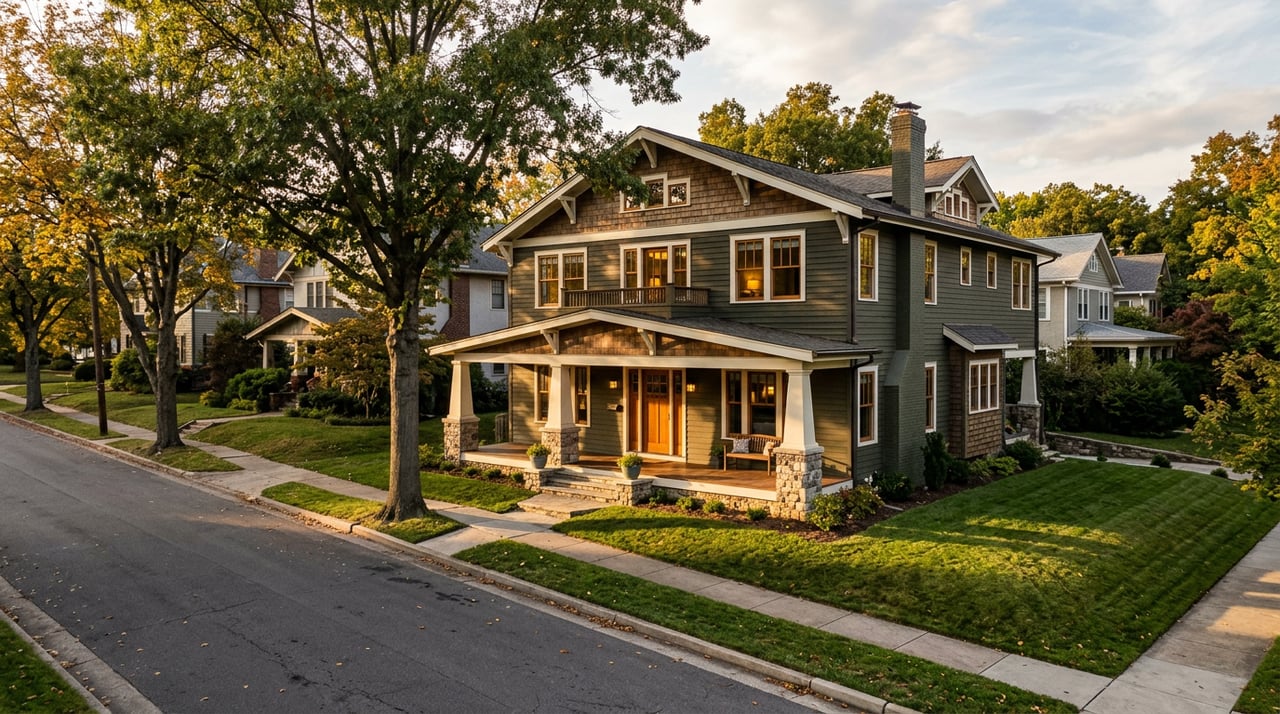
Petaluma was incorporated in 1859, and because the city escaped both the 1906 earthquake and the fires that reshaped so much of the North Bay, an unusual share of its original housing stock is still standing. The city's Historic and Cultural Preservation Committee oversees three separate historic districts: the Oakhill-Brewster Historic District north and west of downtown, established in 1990; the A Street Historic District, established in 1986; and the Petaluma Historic Commercial District, listed on the National Register of Historic Places in 1995 and covering 96 contributing buildings across roughly 23 acres of downtown.
A large share of the homes inside those districts were built by one architect. Brainerd Jones, a self-taught designer, is credited with roughly 80 percent of Petaluma's historic residential properties, working across the decades when knob-and-tube was the only wiring method available. A house with his fingerprints on it, sitting inside Oakhill-Brewster or the A Street district, is exactly the profile an underwriter now flags before quoting a policy.
This is the piece that changes the calculation for sellers. The same designation that makes a Petaluma listing desirable, a documented architectural pedigree, a walk to downtown, original millwork, is the same set of facts that puts the house on an insurer's watch list. Charm and underwriting risk are, in this specific case, the same paragraph of the listing description.
Once a buyer's lender requires proof of coverage on a home with active knob-and-tube, there are really only four paths forward, and a seller who understands them ahead of time can steer a transaction toward the fastest one instead of discovering the options mid-escrow.
Which door a buyer ends up walking through often depends on documentation the seller could have had ready before the house ever hit the market: a licensed electrician's written report on the condition of the wiring, which circuits are still live, and whether the panel itself has been upgraded.
Here's where the same historic designation that creates the insurance friction becomes genuinely useful leverage instead of just a liability to disclose. California's Mills Act allows cities to enter into contracts with owners of qualified historic properties, cutting property taxes in exchange for a commitment to restore and maintain the home to the Secretary of the Interior's standards. A property qualifies if it's listed on the National Register or sits within a registered historic district, which describes a meaningful share of Petaluma's Oakhill-Brewster and A Street inventory.
The mechanism works differently than a standard tax assessment. Rather than valuing the home at market price, the county assessor uses an income approach, effectively capping what the property is taxed on. Across California, savings from Mills Act contracts have run anywhere from 20 to 70 percent depending on the property's age, condition, and local market factors, and the contract runs for an initial 10-year term with automatic annual extensions, transferring to whoever buys the house next.
For a seller weighing whether to pay for a full rewire before listing or let the buyer negotiate it, a Mills Act contract already in place, or one a buyer could realistically pursue after closing, changes that math. It doesn't pay for an electrician directly, but it frees up ongoing cash that historic homeowners are expected to reinvest in maintaining the property, which is precisely the kind of expense a rewire represents.
One distinction saves sellers real time. Petaluma's city guidance is clear that almost all exterior work on a designated historic property requires some level of discretionary review before a permit is issued, a process that can add weeks to a project inside a designated district. Interior electrical work is a different conversation, one that runs through the standard building permit process rather than that same design review.
That matters because it means the insurance fix and the preservation process can run on separate tracks. A seller can commission an electrical inspection and move on a rewire without necessarily triggering the review that would apply to, say, replacing original windows. Petaluma's preservation advocates take exterior changes seriously enough that a 1905 Brainerd Jones-designed remodel at 26 6th Street drew three separate appeals before the city council upheld its approval. That level of scrutiny is aimed squarely at what's visible from the street, not what's behind the plaster.
For anyone preparing to sell a home inside one of Petaluma's historic districts, the order of operations that avoids a mid-escrow surprise looks like this:
Does every Petaluma historic home actually have knob-and-tube wiring? No. Many have been partially or fully rewired over the decades. The point of an electrician's report is finding out exactly what's still live rather than assuming based on the home's age.
Does a Mills Act contract transfer automatically when a historic home sells? Yes. The contract stays with the property and passes to the new owner, which is worth mentioning to buyers directly rather than leaving them to discover it during their own research.
Will Petaluma's preservation committee review a rewire? No. The committee's review authority covers exterior alterations. Interior electrical work generally proceeds through the standard city building permit process instead.
If you're weighing when to list a heritage home, or trying to figure out what a rewire, a Mills Act application, or a design review might actually cost you in time before you go to market, that's exactly the kind of groundwork Rob Sullivan walks Petaluma sellers through before the first showing, not after an offer falls apart over an insurance binder. Vintage service means understanding what makes an old house valuable and what makes it complicated, often in the same sentence. Let's Connect.
If you are seeking a real estate professional whom you can trust and count on for the long haul, then look no further. Rob will earn your loyalty and turn your dreams into reality.