What the Petaluma Median Actually Buys, East Side and West
July 23, 2026
July 23, 2026
Two homes sold in Petaluma this spring for within a few thousand dollars of each other. One was a 1,041-square-foot cottage on the west side. The other was a four-bedroom, 1,763-square-foot house on the east. Both closed inside the same citywide "median."
That is the problem with shopping Petaluma by a single number. The $874,000 median for the three months ending May 2026 is the middle of two markets stapled together: a west side priced for scarcity of walkable historic stock, and an east side priced for square footage that is, quietly, being repriced by a new SMART station and the planning work happening around it.
Over the three months ending May 2026, Petaluma homes sold at a median of $874,000 and a median of $536 per square foot, with days on market around 23 and roughly three offers on average. Zillow's home value index reads slightly higher at $903,827, down 3.4% year over year. Both indicators sit inside a market that Houzeo characterizes as tight, with 0.32 months of supply and sale-to-list running at about 100.34% into early 2026.
Break that same city apart by submarket and the picture separates cleanly:
| Submarket (2026) | Median sale price | Median $/sf |
|---|---|---|
| Downtown Petaluma | $1.406M | ~$1,010 |
| Midtown Petaluma | $1.09M | $558 |
| West Petaluma | $985K | $647 |
| Oakhill-Brewster | $905K | $557 |
| Citywide | $874K | $536 |
| Southeast Petaluma | $830K | $438 |
| ZIP 94954 (east) | $800K | $464 |
The gap between Downtown and Southeast on a per-square-foot basis is more than 2x. No citywide median can carry that much variance without lying to somebody.
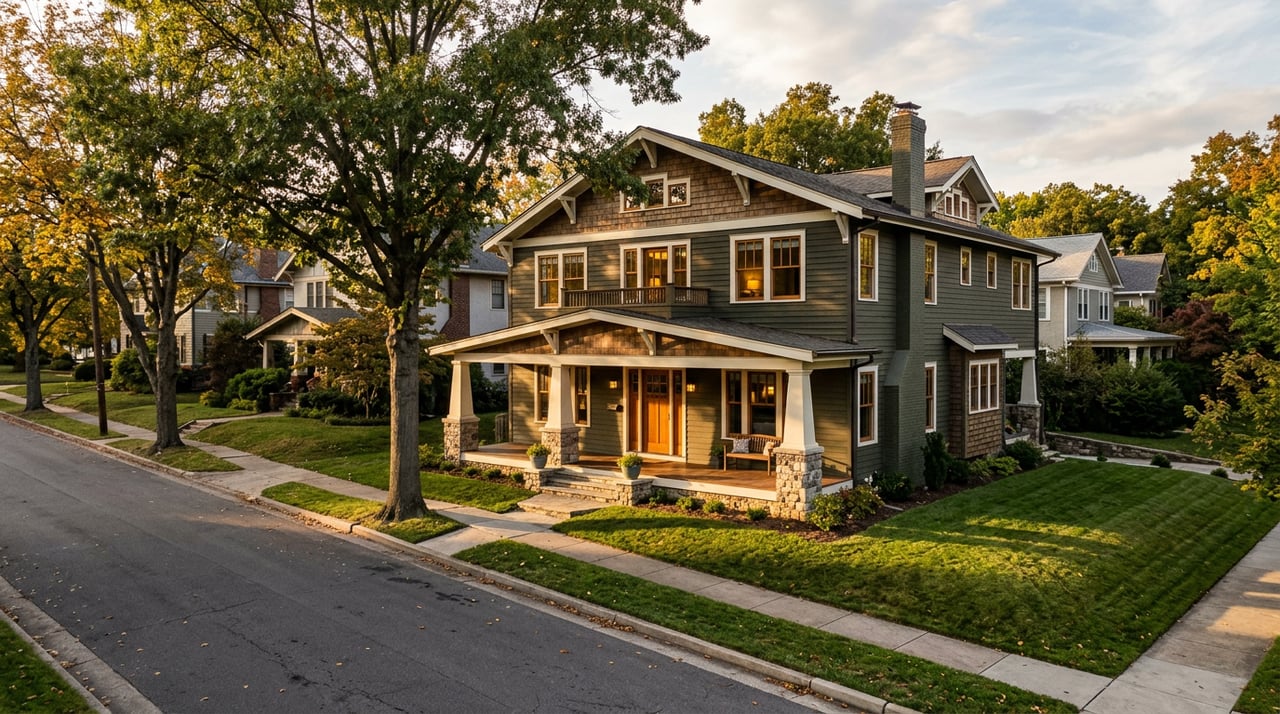
West Petaluma is where the restored Victorians and Edwardians live, along with early twentieth-century cottages on modest lots inside walking distance of the Boulevard. Redfin's most recent submarket read shows west-side homes moving in about 21.5 days, selling for roughly 3% over list on average and about 8% over on the hot ones. That premium is not paying for size. It is paying for a block, a street tree, a porch that already exists, and the near-impossibility of building any of that back.
For a buyer, that means two things at the offer stage. First, comparable sales on the west side often cluster by street and vintage rather than by square footage, so an appraisal can turn on a small handful of neighboring closes rather than a broader pool. Second, the small-lot inventory produces frequent multiple-offer situations on properties that photograph well, which is why waived contingencies show up more often here than in newer parts of town.
East and southeast Petaluma trade at a discount to the citywide median on both price and price per square foot. ZIP 94954 came in around 9.1% below the citywide median in March 2026. Southeast Petaluma's $438 per square foot is roughly a third less than West Petaluma's $647. What buyers get for that discount is post-1960 stock, larger footprints, and yards.
What has changed since the last cycle is that the east side now has structural tailwinds the west side does not.
None of this shows up in a March or May 2026 median. It will show up in comps three years from now.
A discount that is priced against yesterday's transit and yesterday's zoning is not really a discount. It is a bet on whether the plan gets built.
The friction is not the price. It is the appraisal and the contingency window.
When two homes at the same price point sit on submarkets running at $438 and $647 per square foot, a lender's appraiser has to pick a comp pool. If your east-side offer used west-side comps to justify a stretch, the appraisal can come in short. If your west-side offer waived the appraisal contingency because "the market is hot," it can still miss when the last three closes on that block were older and smaller than the subject.
Two moves protect the closing.
First, pull sold comps by ZIP and by submarket, not by citywide search, and ask the listing agent which comps they used to arrive at list. If the answers do not overlap with what your lender's appraiser is likely to pull, that is a signal to slow down, not speed up.
Second, on the east side specifically, ask what the General Plan draft designates for the subject parcel and the parcels around it. A single-family home two blocks from a future Transit Village subarea is a different long-hold asset than the same home five miles away. Neither is better in the abstract, but they price differently over ten years, and that changes what you should pay today.
On a per-square-foot basis in 2026, yes at the submarket level. Downtown, Midtown, West Petaluma, and Oakhill-Brewster all cleared $557 per square foot or higher, while Southeast Petaluma and ZIP 94954 sat between $438 and $464. Individual homes can and do cross the line in both directions depending on renovation, lot, and view.
Not yet in a way the citywide median makes visible. Petaluma North opened in January 2025 and MASCOTS service improvements took effect in April 2026, both recent enough that a full comp cycle has not run through them. The Specific Plan work is still in the workshop and working-group phase through 2026.
The direction and the pace disagree. The citywide median was down 6.5% year over year for the three months ending May 2026, but homes were still selling in 23 days with about three offers on average and sale-to-list near 100%. That is a repriced market, not a slow one, and it rewards precision over patience.
Petaluma rewards buyers who stop shopping by a single median and start shopping by submarket, per-square-foot, and, on the east side, by which planning catalyst applies to the block. If you would like a calm, block-by-block read on where your budget actually lands in this market, Let's Connect with Rob Sullivan.
If you are seeking a real estate professional whom you can trust and count on for the long haul, then look no further. Rob will earn your loyalty and turn your dreams into reality.