Historic Charm Or Newer Build? Finding Your Fit In Petaluma
May 21, 2026
May 21, 2026
Choosing between a historic home and a newer build in Petaluma is not just about age. It is about how you want to live day to day, how much maintenance you want to take on, and what kind of setting feels right to you. If you are weighing character against convenience, this guide will help you compare the tradeoffs clearly so you can tour with more confidence. Let’s dive in.
Petaluma has a rare mix of preserved historic areas and newer infill housing. The city has one National Register commercial district and three historic districts overall, including the downtown Historic Commercial District plus the Oakhill-Brewster and A Street residential districts. The city also notes that more than 300 properties have been surveyed for historic significance.
That historic depth is part of what makes Petaluma stand out. City historic resources reporting says the downtown core came through the 1906 earthquake relatively unscathed, which helps explain the concentration of intact 19th-century residential and commercial buildings you still see today. At the same time, current city planning emphasizes preserving historic neighborhoods while directing most new housing toward infill, transit-adjacent, and service-adjacent sites within the Urban Growth Boundary.
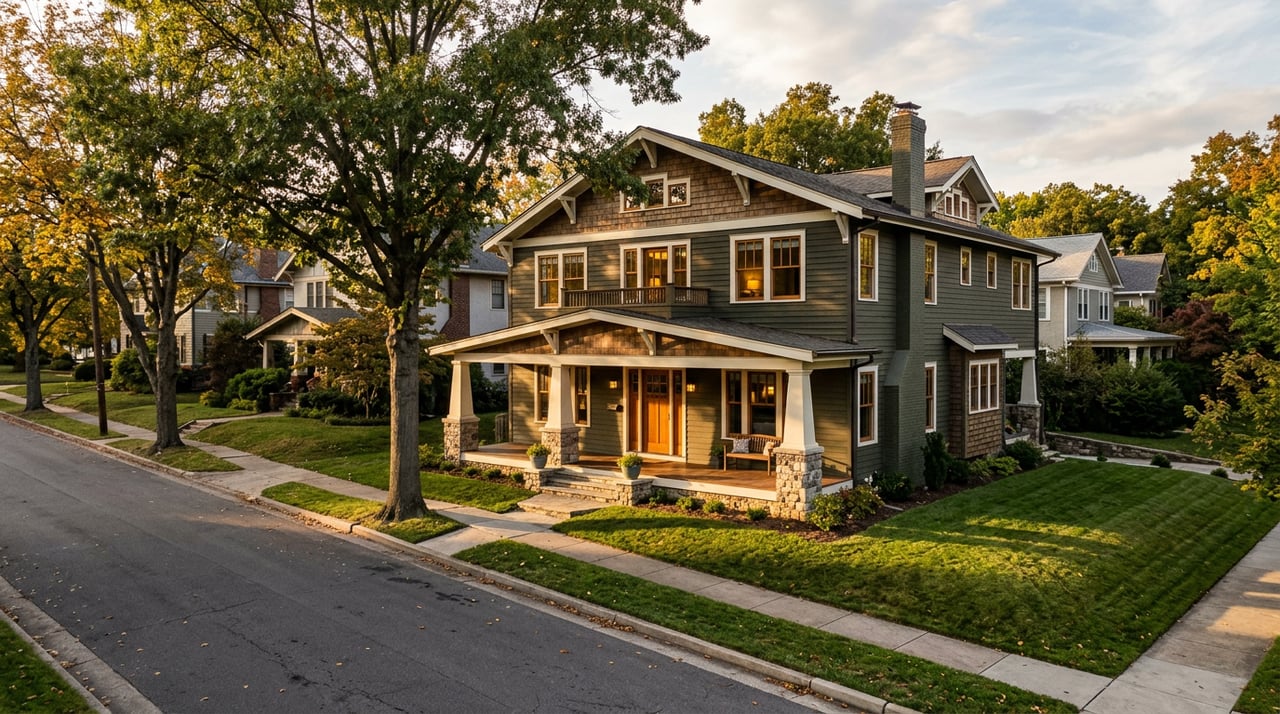
If you are drawn to older homes, Petaluma gives you real depth. The city’s historic survey identifies styles such as Italianate, Carpenter Gothic, Queen Anne, and Second Empire, along with later Craftsman, Spanish Revival, Mediterranean Revival, Tudor Revival, Neoclassical, and Colonial Revival homes.
These homes are especially tied to Petaluma’s early neighborhoods near the core. The survey describes early residential areas west of downtown as freestanding single-family homes, with many intact examples still present. In Oakhill-Brewster, the city describes architecture spanning from the 1850s through the 1980s, while A Street is mostly pre-1925.
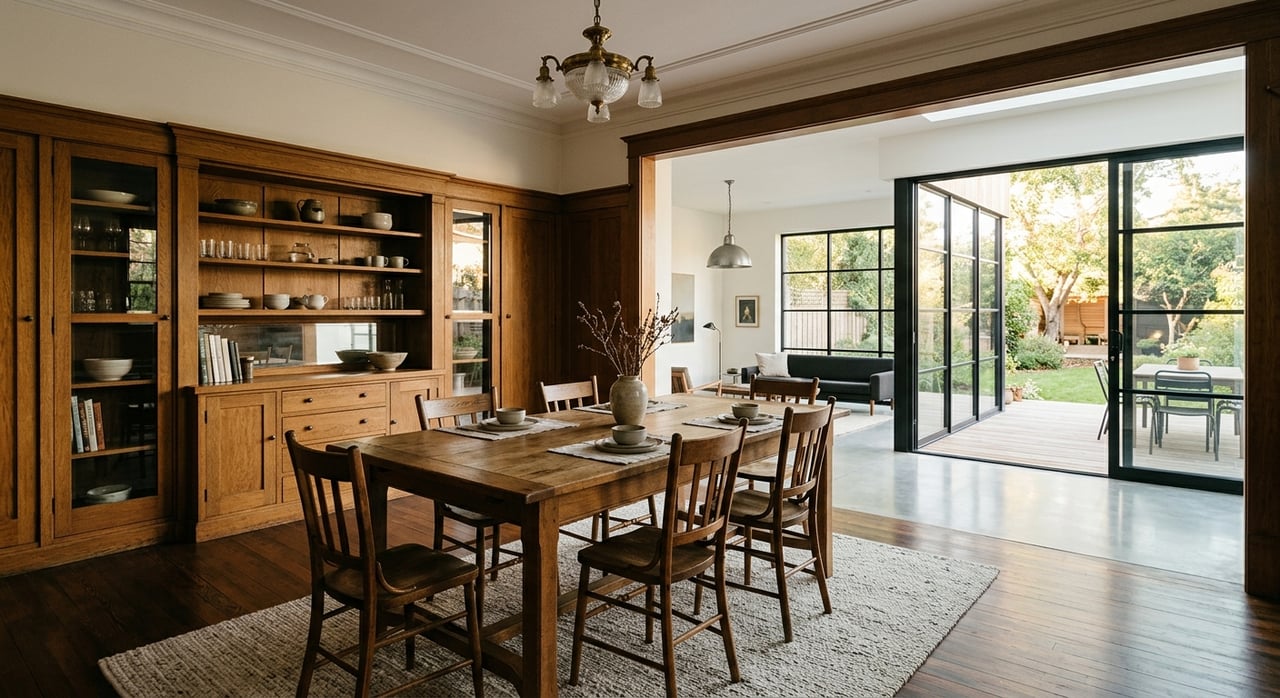
Older homes often live differently than newer ones. Preservation guidance treats features like the basic floor plan, entry halls, parlors, dining rooms, and primary staircases as important character-defining elements. In practical terms, that often means more separated rooms and a more formal flow than you find in open-concept construction.
For some buyers, that is the appeal. You may like defined rooms, original trim, and a layout that feels tied to the home’s era. For others, it can feel less flexible if you are used to one large kitchen-living space.
In Petaluma’s historic districts, exterior work is not always simple. The city advises owners to review district guidelines and the Secretary of the Interior’s Standards before exterior changes, and it says almost all exterior work requires some level of discretionary review.
That does not mean you should avoid a historic home. It means you should go in with clear expectations. If you know you want to change windows, alter the front exterior, or take on visible exterior projects, city review may become an important part of your decision.
Older homes usually ask more of you over time. Preservation guidance emphasizes maintenance and repair over wholesale replacement, noting that regular upkeep, roof care, and secure connections help reduce weather damage and long-term deterioration.
In Petaluma, roof drainage matters too. Guidance on rehabilitation warns that neglected gutters and downspouts can shorten the life of roof and wall materials. If a historic home is on your shortlist, it is wise to pay close attention to these basics early.
In Petaluma, newer housing is often not a one-off custom build on a large lot. Recent city-described projects include townhomes, condos, and planned detached homes such as Riverscape, Oyster Cove, Quarry Heights, and Creekwood, along with detached two-story homes like the example on Mallison Way.
That pattern matters when you are deciding what fits your life. Newer inventory in Petaluma is often more compact, more standardized, and more function-driven, with features that may include rear garages, shared open space, attached layouts, mixed-use elements, live/work space, or ADU potential depending on the project.
Newer homes are generally better positioned for tighter building envelopes and more predictable comfort. Department of Energy guidance explains that efficient homes work best when insulation, moisture control, air sealing, and ventilation are planned together as a whole-house system.
Windows are another practical difference. DOE notes that virtually all new efficient buildings use double- or triple-glazed windows, while single glazing is common in older buildings. That does not guarantee performance in every home, but it helps explain why newer construction often feels less drafty and more consistent.
Petaluma’s climate adds an important layer to this decision. Sonoma County documents describe a marine climatic zone that extends through the Petaluma Gap and is shaped by ocean airflow, fog, and cool breezes.
In that setting, insulation, air leakage, and moisture management matter in both old and new homes. DOE notes that many older homes have less insulation than homes built today, and that air leakage can contribute to moisture issues and reduced durability. That is one reason some buyers lean newer if comfort and lower day-to-day upkeep sit high on the list.
A historic home may be the better fit if you care most about architecture, original details, and a strong sense of place near Petaluma’s older core. You may also enjoy homes with more defined rooms and a story you can feel the moment you walk in.
This path tends to work best if you are comfortable with maintenance and realistic about possible limits on future exterior changes. If preserving craftsmanship feels meaningful to you, the tradeoff may feel worthwhile.
A newer build may fit better if you want a more predictable layout, easier upkeep, and systems designed with modern performance in mind. You may also prefer attached garages, simpler storage solutions, and less uncertainty around windows, insulation, and drainage.
That does not mean newer is always better. It simply means the home may align more closely with buyers who want convenience, efficiency, and a layout built for current routines.
Before you start scheduling showings, it helps to get specific about how you live. The clearer you are up front, the easier it is to sort charm from fit.
Ask yourself:
These questions can save time and help you tour with purpose instead of reacting only to first impressions.
Whether you lean historic or newer, a first-pass checklist can help you compare homes on more than looks alone. In Petaluma, that is especially useful because climate, age, and construction style can affect comfort and upkeep in different ways.
As you tour, pay close attention to:
For historic homes, think about which features are part of the home’s identity and which spaces may be more adaptable. For newer homes, look past the fresh finishes and consider how well the layout, storage, and shared or private outdoor space actually support your daily life.
In Petaluma, this choice is rarely about one option being objectively better. It is about whether you want the texture and responsibility of a historic home or the convenience and predictability of a newer one.
The good news is that Petaluma offers both. If you want help sorting through tradeoffs, comparing neighborhoods, or identifying which homes truly match your goals, Rob Sullivan can help you approach the process with steady guidance and a local perspective.
If you are seeking a real estate professional whom you can trust and count on for the long haul, then look no further. Rob will earn your loyalty and turn your dreams into reality.